


Last year, Saudi Arabia put down structured, enforceable rules on how companies must recruit into law, covering everything from job ads to how interviews are run.
The rules have been in force since March 2025. But recently, the ministry started reminding companies about the violations. Candidates can report it, and there’s a fine.
The rules cover the full path from vacancy to verdict and some key ones are:
Job ads can’t discriminate, must map to a standard occupation list, and can only run on approved channels.
They also need a clear description of duties, skills, hours and benefits.
Interviews need at least three days’ notice, a proper venue and accommodations for candidates with disabilities.
The panel can’t ask about personal freedoms or a previous employer’s confidential information.
And every candidate must hear back within 30 days, with reasons for any rejection
The 3 rules that apply to every TA leader anywhere
While they have defined many rules, I think these 3 are the basics that any good TA leader would sign up for anyway.
Here they are.
1. Set clear boundaries while interviewing
Last month, a candidate’s video went viral. TOI wrote about it:
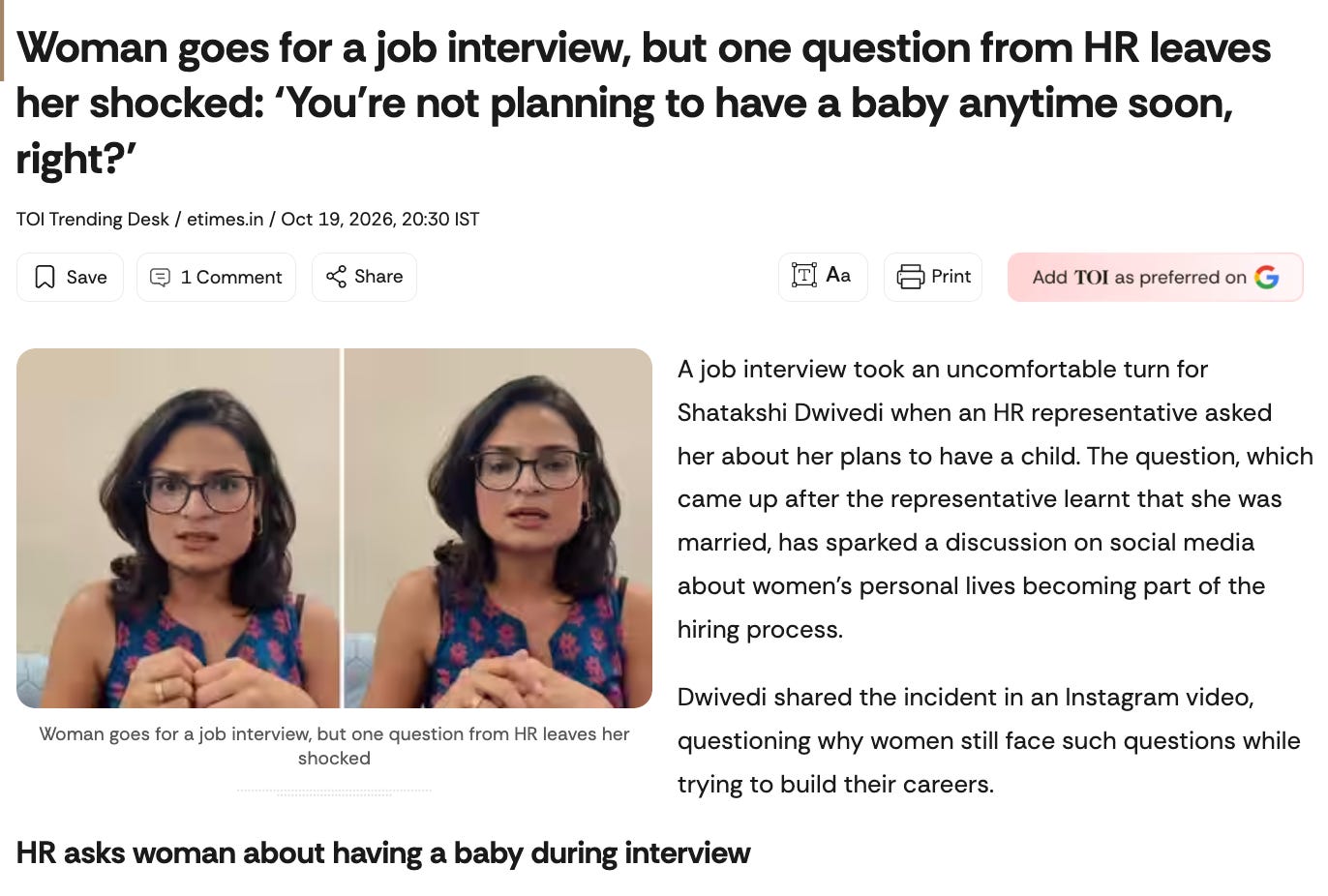
The candidate said as soon as she told the interviewer that she got recently married - the next question was: “You’re not planning to have a baby anytime soon, right?.
Several comments on this article confirmed similar experiences.
One other thing I have often seen companies doing is asking confidential information about the company candidate is working at. Their code, their design, their sales processes, customer information and so on. While it looks in good faith, many times the intention is less on hiring but more on collecting how their competitors operate.
The rule to follow is simple: Keep the interviews focussed on the professional experiences and skills. Interviews can’t include questions on personal freedoms or dig into a past employer’s confidential information. Asking these just makes you look unprofessional, petty and insecure.
2. Tell every interviewed candidate the outcome within a set timeline
Everyone knows this but very few companies do more than “hope”.
Last week, a candidate posted on LinkedIn about how he cleared the first round of a walk-in drive and then was left hanging without any updates.
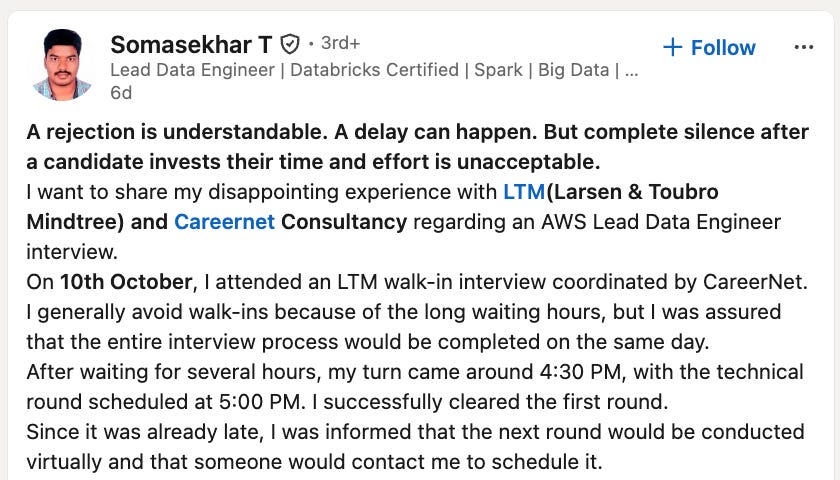
Another candidate had posted recently about how he cleared all the rounds but weeks later, the only update was that the role was “on hold due to business requirements.” (The post is now down. But it was here on LinkedIn)
Such experiences don’t only hurt your employer brand. They indicate that the TA team failed to treat others professionally and respectfully.
The rule is simple: Don’t keep interviews unorganised. Record the result of every interview and make a mandate to inform each candidate within 7-14 days, with reasons for a no. It’s better to share bad news than to not say anything at all.
3. Don’t live in denial and take hiring discrimination seriously
In 2024, Reuters reported that hiring agents for a large electronics manufacturer in India were turning away married women. After the story, the company told its agents to drop marital status, age and gender from their criteria. (Reuters)
Most companies would say this could never happen with them. Discrimination looks like something fully in control.
But it isn’t a rule someone breaks. It’s part of how people make decisions. We call it experience, gut feel, pattern-matching. “People from that kind of college usually struggle here.” “Too senior, won’t you get bored?” “Not a culture fit.” The same instinct that helps us decide fast can quietly turn into bias.
That’s why a line in the policy saying “no discrimination” isn’t enough. Getting there takes three things, done again and again:
Talk about it. Make it a team conversation about why it matters, not a compliance slide.
Sensitise the people who interview. Help them spot where gut feel ends and bias begins.
Audit it, continuously. Look at who drops out at which stage, and why.
Whether they become laws or not, these 3 are just basic recruiting principles every company must adhere to
Saudi Arabia chose the legal route to force the industry to do what thinks is right and fair. But we can implement certain things that are just table stakes for social responsibility.
Because for TA professionals, closing roles isn’t the most important metric. What matters is closing them fairly and respectfully.
So which of the three would your process fail today? Start there, and hit reply to tell us.