


There was a time when hiring process was predictable and manual.
Candidates used to apply manually. Recruiters used to review manually using basic filters. Timelines and positions were relatively predictable and didn’t change once hiring started.
But we all know - the times have changed.
Hiring now happens in spurts. Role requirements are way tighter. Timelines are as of yesterday. And the killer? The unpredictability. 100 positions that were opened last week are now paused for the time being since the client has asked for some more time.
Result? Hiring often works like this now:
Companies open roles.
Recruiters go on overdrive. But their job is to close urgently so they they shortlist only the most closable candidates and leave everyone else hang in there. Just in case, if more positions come or the requirements change.
In the meantime, candidates wait and wait and wait. They see a lower conversion and guess do what? Increase applications with AI tools. As per Greenhouse, average applications per job rose 3.5x in 2025 vs 2021. India specific numbers will be much higher.
And what this leads to? More recruiters use more of AI tools. But to pick the 5% shortlist faster, not to increase responsiveness to the candidates. The 95% other folks who were not shortlisted? Using AI to reject or inform them is an inconvenience (giving negative news feels right but it can kick up a sleeping sandstorm) and also illegal in many jurisdictions.
The communication code which is effective in recruiting today
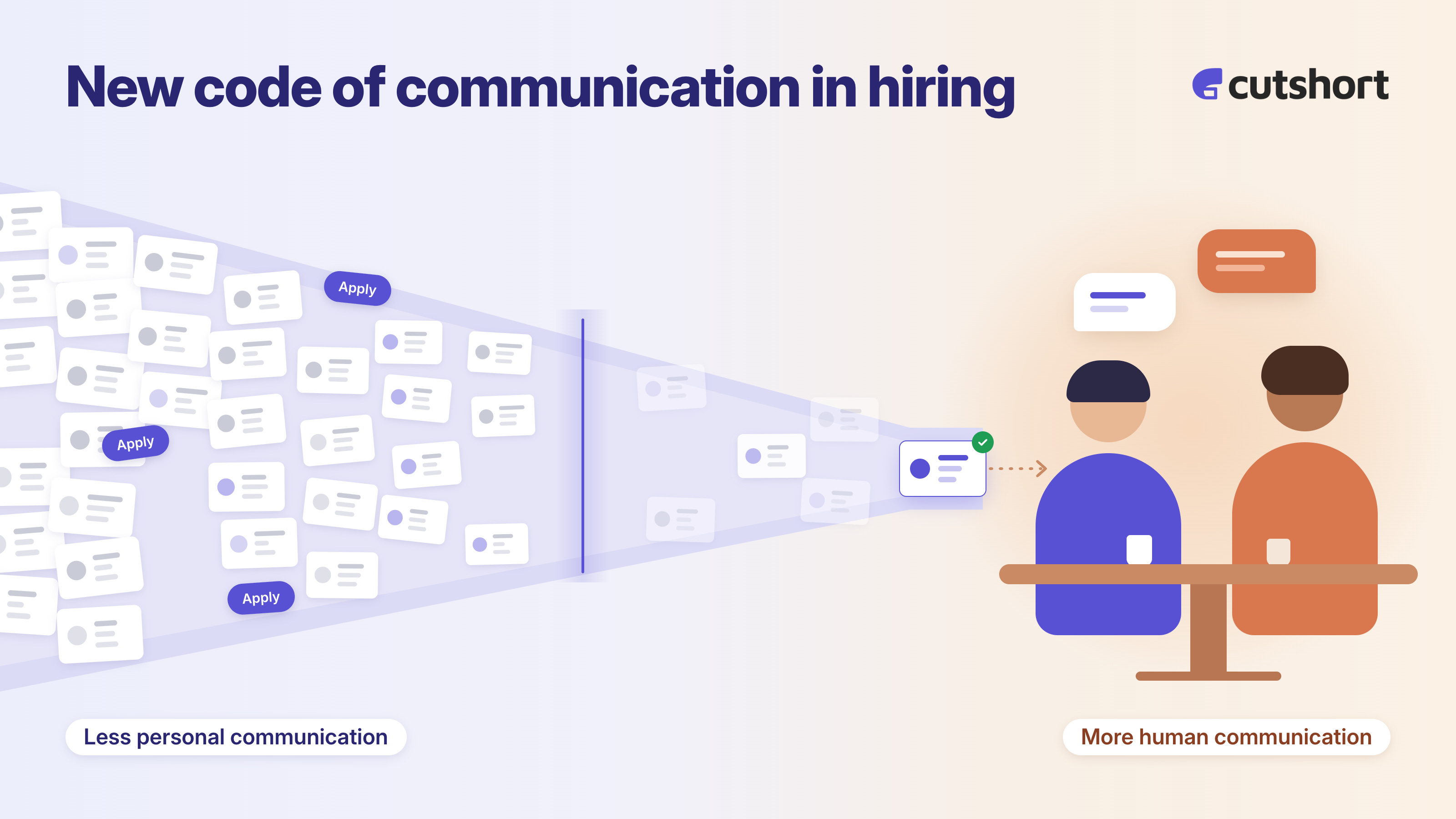
In the early stages, things are now less personal
Both sides have only 1 goal - relevant shortlists. Candidates need to increase volume, speed and targeting. The smart ones are spinning up their own agents.
Companies need to improve their shortlisting system to spot the right ones. Candidates applying with AI is actually good for them since it increases their pool. Once they shortlist, they can validate the candidate’s interest and skills further with a bit of human + automation.
In later stages, human touch is getting more important than before
Once a candidate clears initial rounds, since both parties have now gone past the initial pains and are better aligned, it’s expected that communication will be human again.
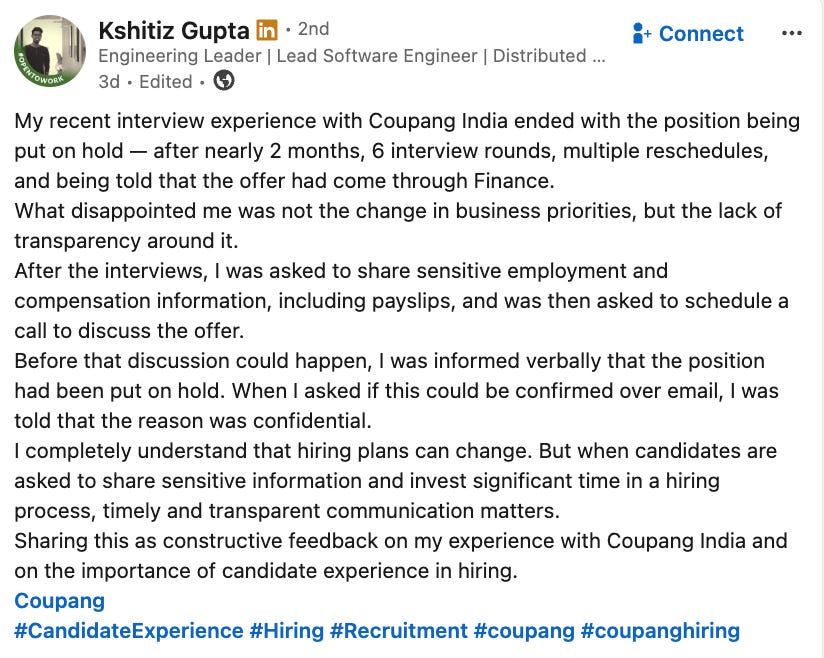
If this communication fails, it’s likely to create a ripple. For e.g. last week, an engineering leader shared his hiring process experience with Coupang India:
What candidates and hiring teams need to do
So, in the context of these new hiring realities, what should each side actually do?
Candidates
Treat early apply as a funnel building game. Optimise relevance + volume + speed. Most recruiting teams can’t give personal replies or rejections so if you don’t hear back, follow up 2-3 times and move on.
Unless you are aiming for senior roles, use AI to increase your funnel. Ensure AI doesn’t misrepresent or stuff your resume.
Wait to get closer to the final rounds before expecting better human communication from the recruiters and hiring managers. But even then avoid asking for deviations like a different job title, salary bracket, location, etc since it might silently derail the hiring process.
Companies / TA leaders / Recruiters
Open roles only when you have the approvals and timelines. Not to “just build a pipeline”.
Invest in the right tools to shortlist. Manual reviews or trying to fight AI applications is not worth it.
Invest in ways to screen talent. If you don't have a huge screening budget, tools like Cutshort AI Screener can make this layer considerably cheaper.
Ensure proper and timely human communication at least with the candidates who clear your first 1-2 rounds. If priorities change, close the loop in writing professionally.
Let’s accept that the hiring environment has shifted.
Candidates will use AI. Companies will use AI. Applications will increase. Screening will become more automated.
TA leaders need to make the initial hiring process robust, transparent and respectful for all the parties.
The later stages is where the human touch matters much more since it needs to compensate for its lack earlier in the process.
Less human at the top of the funnel. More human as the stakes go up.
Maybe that’s the new hiring etiquette we need to agree on.